Skip to content

MonographFounded 1912Turin

PoltronaFrau

Founded
1912, Turin
Founder
Renzo Frau, 1881 to 1926
Workshops
Tolentino, Marche
Signature
Pelle Frau leather

Poltrona Frau is an Italian house built on a stubborn conviction: that leather is not a covering but a structural material, and that learning to work it properly takes longer than one lifetime.

Renzo Frau registered the name with the Turin Chamber of Commerce in 1912. He was Sardinian, born in Cagliari, and had been selling imitation leather for a living when work took him to Britain and he met the Chesterfield armchair. He did not invent the form. He brought it home, rebuilt it with a lighter hand, and named the company after the object itself.

The house he left behind has since furnished royal apartments, opera houses, airport lounges, concert halls and the interiors of cars built a few streets from where it began. It has changed owners, cities and centuries without changing the argument. What follows is a monograph rather than a catalogue: four chapters on where it came from, how it works, what it has made, and the designers who kept arguing with it.

Begin the monograph
Plate I
Plate I — The buttoned armchair. Rolled arms, arched back, capitonné front: the silhouette the house has been refining since its first catalogue.

IIValues & Craft

Three things the house refuses to hurry

Every piece that leaves the workshops passes through the same three commitments. They are not slogans. They are the reason a frame takes weeks rather than hours.

I

Material mastery

The hide decides what the piece can be.

Pelle Frau is full-grain bovine leather, developed to the house specification and produced with long-standing partner tanneries from European hides. It is dyed with anilines in the drum, so the colour is driven through the thickness of the skin rather than painted onto its surface, then greased, staked and softened until it will take a curve without breaking the grain.

Colour has been treated as a discipline in its own right since 1986, when the house built its first formal system with the chromatologist Paolo Minoli. That system ran to 96 shades before it was replaced in 2020 by a new range developed with the colourist Giulio Ridolfo, organised into seven families rather than a single chart. Since 2022 the leather has also been produced chrome-free.

A hide is not flat and it is not uniform. Cutting one is a judgement about where the tension will fall once the leather is stretched over a frame, and it is made by someone who has made it several thousand times before.
II

Italian craftsmanship

Hours are the raw material nobody lists.

The house works the way a tailor works. Frames are built from seasoned beech. Biconical steel springs are tied by hand onto jute belts. Padding is built up in layers of vegetable and rubberised horsehair rather than cut from a block, so a piece softens over years instead of collapsing all at once. The leather goes on last, stretched by hand, judged by feel.

Capitonné, the deep diamond buttoning across the front of the classic pieces, is where this is most visible. Each button is drawn through by hand and the surplus leather is folded into a pleat that must fall in the same direction as every other pleat on the piece. Get one wrong and the eye finds it immediately. There is still no machine that does it convincingly.

The company puts it more bluntly than any of this. Its own line is that it uses the most advanced technology in the world: its hands. Training follows the same logic, through a leathercraft programme run at Tolentino under master upholsterers rather than a short induction on a line.

III

Design collaboration

A house needs someone to argue with.

For its first fifty years Poltrona Frau largely made its own designs. After the move to Tolentino it began doing something more interesting: handing its craft to architects and designers who wanted to push it somewhere uncomfortable. Gio Ponti's Dezza, in 1965, was the first product of that new era.

What followed has produced pieces the house would never have reached alone, from Ferdinand Alexander Porsche's ergonomic experiment of 1982 to the lean geometries of the last two decades. The collaboration works in both directions. A designer learns what the leather will and will not tolerate; the workshop learns a new way to reach a shape.

The same openness carries into work far outside the living room. Auditorium seating for Renzo Piano, Snøhetta, Herzog & de Meuron, Frank Gehry and Jean Nouvel has all been built in the Marche, to acoustic and safety standards no domestic armchair will ever face.

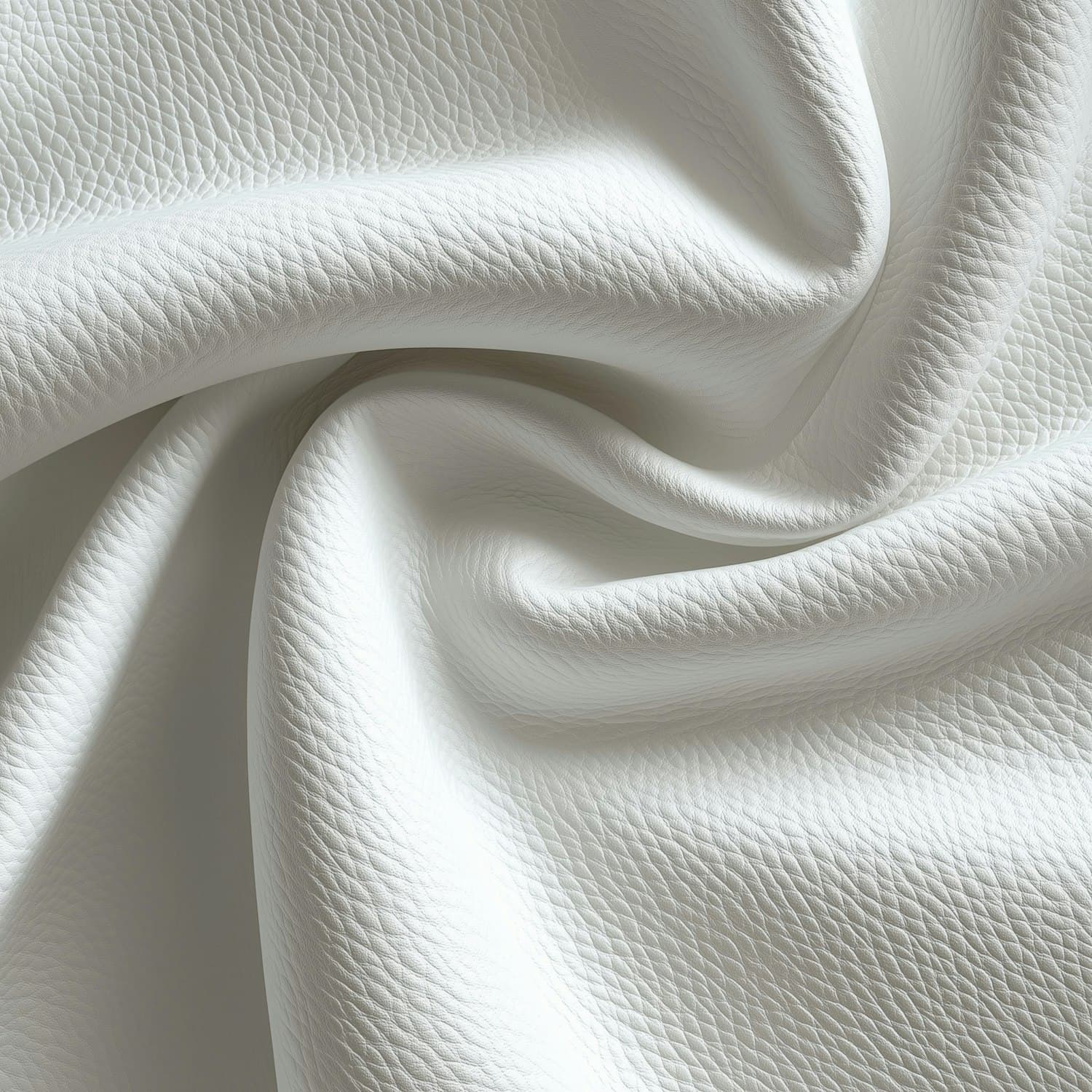
Close-up of full-grain leather folded into soft curves, the pebbled surface catching a low raking light

The material

The colour is driven through the skin in the drum, never laid across its face.

That single decision explains most of what follows. An aniline-dyed hide has nowhere to hide: every mark the animal carried in life stays legible in the finished piece, so the selection is unforgiving and no two chairs in the same shade are ever quite identical. It is also why the leather ages into something better rather than merely older.

Illustrative material photography. Full-grain leather, not a specific Poltrona Frau hide.

IIIChronology

Six moments that set the course

Open any entry to read it in full. The complete narrative continues in the Story chapter.

Read the full story

Renzo Frau registered the Poltrona Frau trademark with the Turin Chamber of Commerce in 1912. He was born in Cagliari in 1881, had served as an officer in Milan, and was working as a sales representative for a manufacturer of imitation leather when travel to Britain introduced him to the Chesterfield armchair.

He began by importing the form, then by building his own version of it. The Chester appears in the company's first catalogue that same year: the Edwardian English club chair, revisited with lighter proportions and a more forgiving seat.

The name is a plain description of the business. Poltrona is Italian for armchair, and Frau is a Sardinian surname. From the first day the company told you exactly what it made and who made it.

In 1926 Poltrona Frau was appointed an official supplier to the Italian Royal Household, the House of Savoy, an endorsement that placed its work in official and aristocratic interiors and gave the name a standing it has never lost.

Renzo Frau died the same year, having run the company for fourteen years. His wife, Savina Pisati, assumed control. She had already run the business once before, during his absence in the First World War, and she now continued production from the archive of drawings he left behind.

Savina Pisati is the least discussed figure in the company's history and among the most consequential. The armchair that would come to define the house entered production four years into her tenure.

The piece entered the catalogue in 1930 as model 904. It is thought to derive from sketches Renzo Frau left his wife, brought into production under her direction four years after his death.

Its enveloping arms, rounded back, deeply buttoned front and single row of leather-covered pins made it immediately legible, and its comfort made it durable in a way that fashion could not undo. It has been in production ever since, and it has done more than any advertisement to fix what most people picture when they picture an Italian leather armchair.

The name Vanity Fair arrived only in 1984, more than half a century later. Anyone describing a buyer in the 1930s asking for one by that name is telling you a story rather than a history.

In 1962 the company was acquired by the Nazareno Gabrielli group and production was relocated from Turin to Tolentino, a town in the province of Macerata in the Marche. It has been based there ever since.

The move mattered more than a change of address. The Marche was dense with tanneries and leather works, which meant a local workforce that already understood hides as a working material: how a skin varies from spine to belly, where it will stretch and where it will refuse.

The consequences arrived quickly. In 1965 the house produced Gio Ponti's Dezza, the first product of the Tolentino era and the beginning of a habit of working with outside architects that has never stopped.

In 1986 the house produced the full leather interior of the Lancia Thema 8.32, the Ferrari-engined version of Lancia's executive saloon. It was the beginning of an automotive business that now trims interiors for a long list of European marques, and it started, fittingly, in the city where the company began.

The same decade saw the first formal colour system, built with the chromatologist Paolo Minoli in 1986, which turned the choice of shade from a conversation into a documented discipline.

In 1998 two things happened that defined the second business. Poltrona Frau upholstered its first series-production Ferrari, the 456M, and it built the RP01 armchair for Renzo Piano's Auditorium Parco della Musica in Rome. Concert hall seating is inspected by thousands of people a week and replaced on a schedule set by an engineer. It is the hardest possible test of an upholstery craft, and the house has been passing it ever since, for Snøhetta in Oslo, Herzog & de Meuron in Hamburg and Frank Gehry in Paris.

The company reached its hundredth year in 2012 and opened a museum at Tolentino to mark it, some 1,400 square metres with an exhibition itinerary designed by Michele De Lucchi, gathering the archive, the historical models and the tools that made them.

In 2014 the Poltrona Frau Group, by then including Cassina and Cappellini, was acquired by the American manufacturer Haworth and taken off the Milan stock exchange. The workshops carried on in the Marche much as before. It is worth being precise here: the group and the brand are different things, and pieces by Cassina or Cappellini are not Poltrona Frau pieces.

The most recent chapter is material rather than corporate. In 2022, its hundred and tenth year, the house moved its leather to a chrome-free tanning process, with the stated intention of converting every collection to it by 2030.

An aside

An aside

A leather chair is one of the few manufactured objects that improves by being used badly.

Everything else in a room is defending itself against you. The paint wants not to be scuffed, the timber wants not to be marked, the fabric wants not to be sat on in the same place every evening. A well-made hide wants precisely that. It takes the print of a particular body, darkens where a hand falls, and creases along the lines of a habit.

This is why the house has never had much interest in making furniture that looks new for a long time. It makes furniture that looks used, well, for a very long time. Those are not the same ambition, and only one of them survives contact with an actual household.

From the introduction